Being able to predict a leader’s behavior, situational performance, ability to motivate staff, and ethical compass can only improve investment success. Are you incorporating behavioral economics into your investment decisions? Can you identify the CEOs who are likely to outperform rather than underperform?
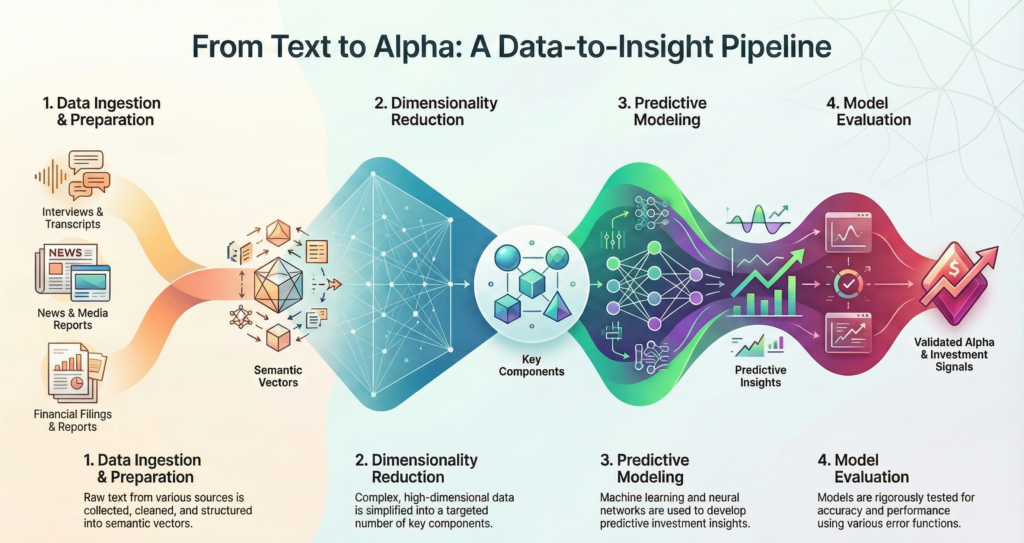
We source data from company filings, earnings calls, news, media, websites, interviews, resumes, and other structured financial data to develop rich, detailed behavioral profiles that enable predictive behavioral and decision-making. Using artificial intelligence, machine learning, and grounded in academic research, Leadermind transforms leadership characteristics and qualities into actionable investment insights.
Personality is not random. We help investors underwrite idiosyncratic leadership risk.
Leadership is not “unmodellable.” We provide over 200 metrics related to attitude, behavior, cognition, and desire. Additionally, contextual psychological measures such as stress and relationship health, as well as formative, childhood, social, demographic, company, job, and financial factors.
We create a full network of behavioral profiles within a company, including CEOs, CFOs, Board Members, Analysts, and other leaders.
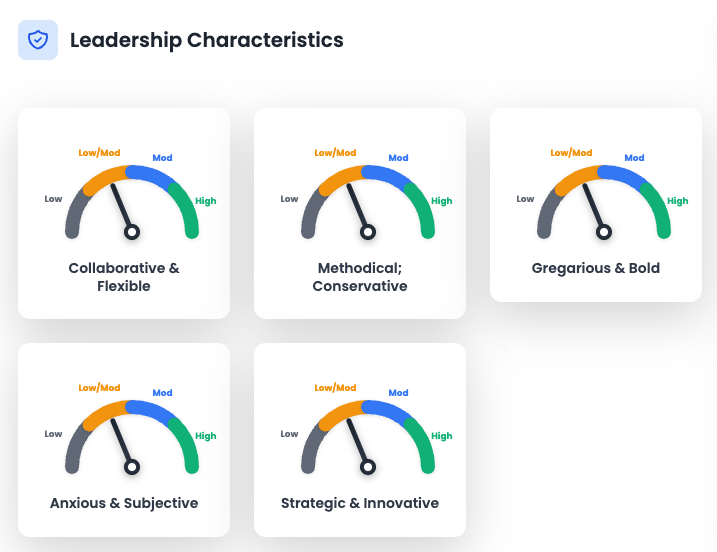


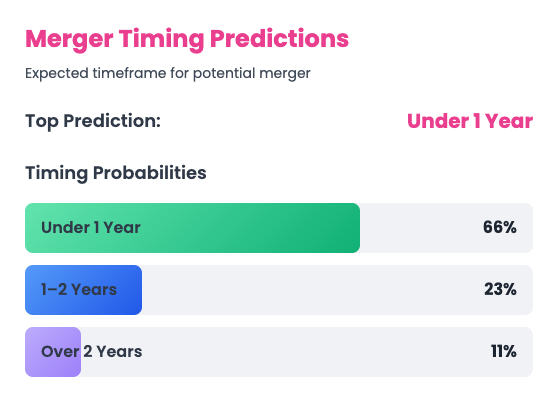
We expose the idiosyncratic risks associated with executive behaviors and decision-making.
Quantify the risk related to aggressive risk‑taking, tendencies to overpay in acquisitions, and higher fraud and litigation risk.
We provide measures for leadership’s likely allocation of capital, appetite for financial leverage, innovation, response to stress, approach to M&A, and stock-relevant outcomes.
Behavioral profiles with the most salient traits and their impact on culture, strategy, team cohesion, fraud probability, and strategic risk.
Red‑flag indicators for Dark Triad traits and strained CEO–CFO relationships, which are associated with greater governance and accounting risk.
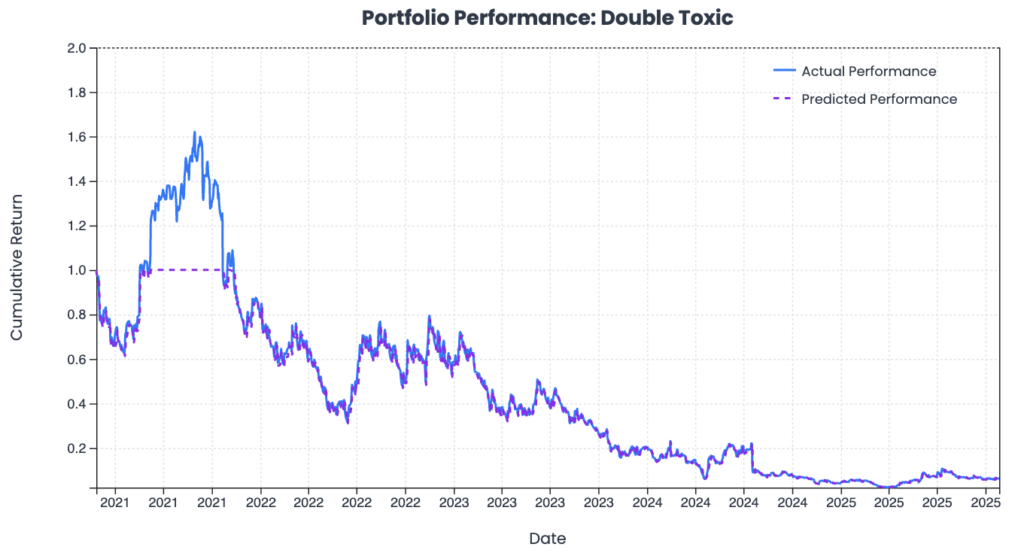
Back‑testing and forward‑walking simulations show how different behavioral constellations would have performed historically, giving you a grounded basis to size risk and position within or against these profiles rather than relying on anecdotes.
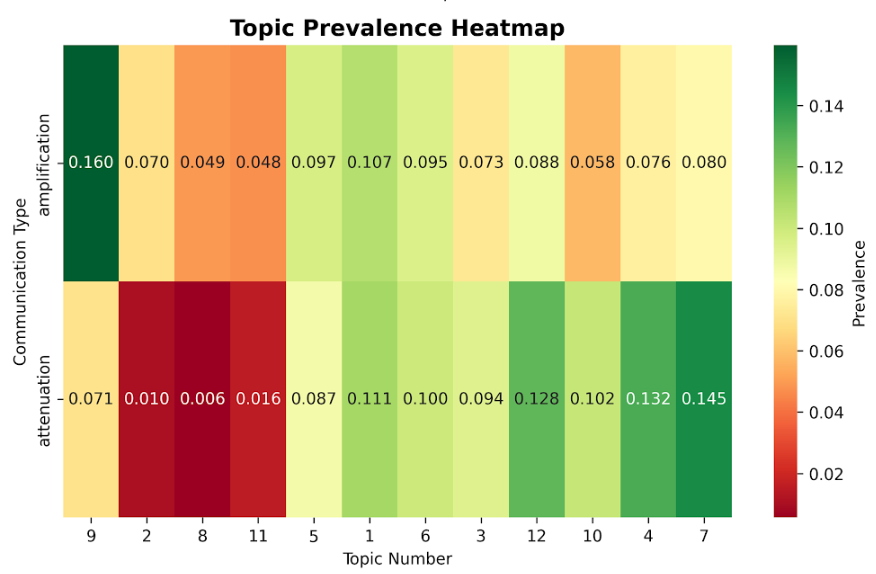
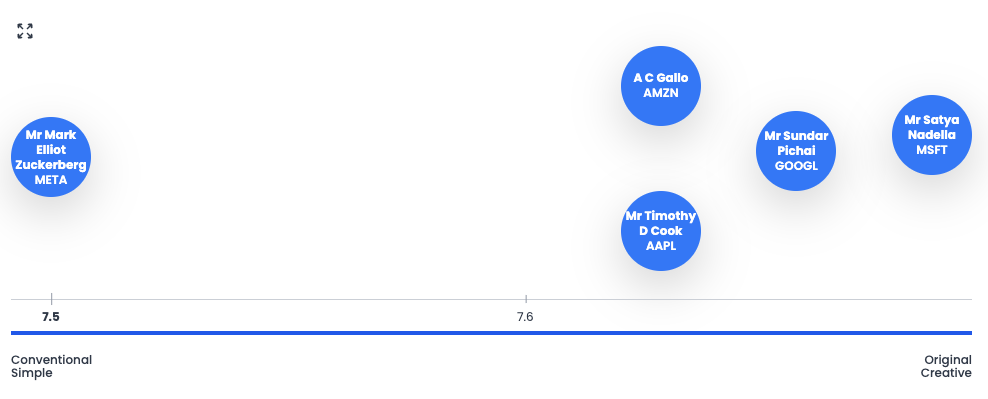
Topics and themes that garner leadership’s attention. Identify if the narrative in an interview, article, or earnings call around hot themes, like AI, reflects genuine strategic commitment or thin, copy-pasted talking points. Compare to competitors to evaluate attentional breadth, focus, and uniqueness.
Institutional investors live in a double bind: deviate from the benchmark, and you risk being wrong alone; hug it, and you risk underperforming by missing avoidable blow‑ups or idiosyncratic winners.
Our objective, academically grounded profiling, reduces that uncertainty.
It gives you defensible, documented reasons to size up where leadership creates a structural edge—and to size down where personality adds uncompensated risk—so you protect both client capital and your own track record.
Every active manager is chasing the same goal: durable alpha that survives fees, benchmarks, and market cycles. Factor models, alternative data, and sophisticated risk tools are now table stakes, which means many investors end up owning the same names for the same reasons.
The question is “Where does your edge actually come from?
Leadermind is a behavioral intelligence platform built for institutional investors. It analyzes management transcripts, interviews, and other primary‑source language, then applies large language models and machine learning to estimate psychometric traits across multiple evidence-based frameworks to predict behaviors and decision-making.
These traits are translated into investment-relevant signals: a propensity to overpay in M&A, a willingness to lever up, a bias toward innovation and marketing over operational discipline, and likely behavior under uncertainty. In short, we quantify the human drivers behind future cash flows and multiples.
Markets often misprice leaders—over-rewarding charisma and narrative, or under-appreciating disciplined operators and contrarian thinkers.
We surface companies where the behavioral profile diverges from the market story. Such as visionary yet disciplined CEOs whose traits have historically correlated with better innovation payoffs and more efficient R&D spending; or leaders with elevated Dark Triad or hubris indicators in situations where the Street is complacent about governance—making downside skew underappreciated and short or underweight positions attractive.
By integrating these signals into your screens and models, you can build high‑conviction overweights and underweights that peers cannot easily replicate.
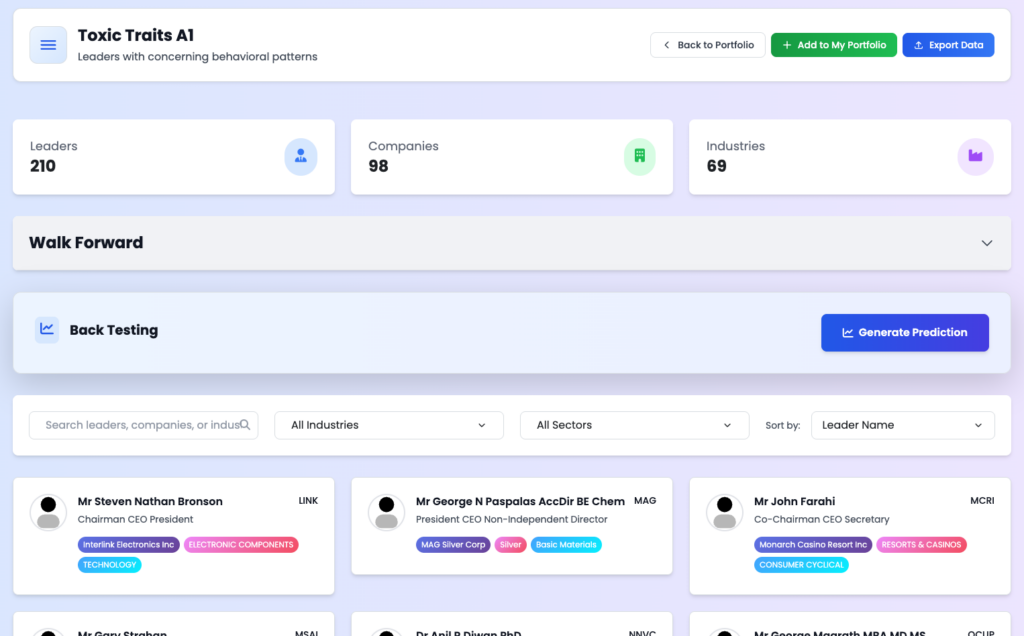
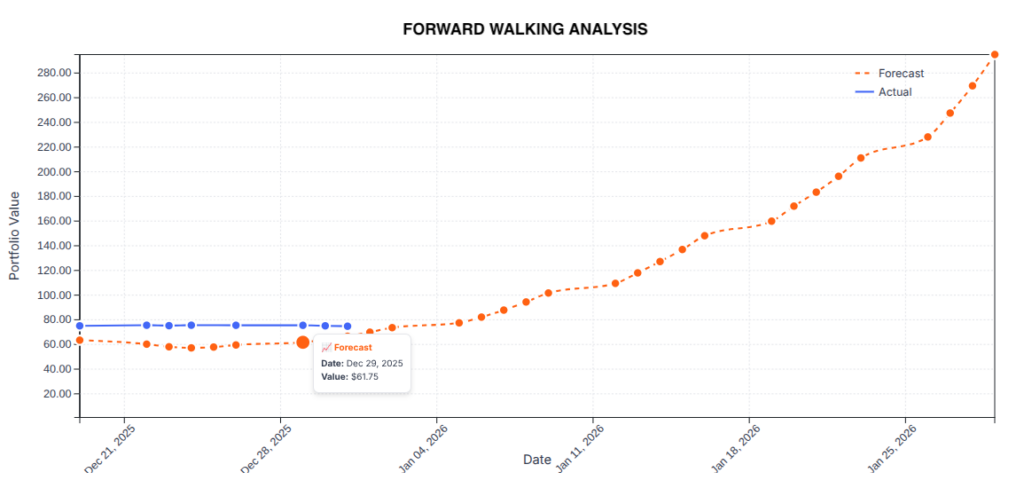
We let you express a behavioral thesis as a systematic strategy.
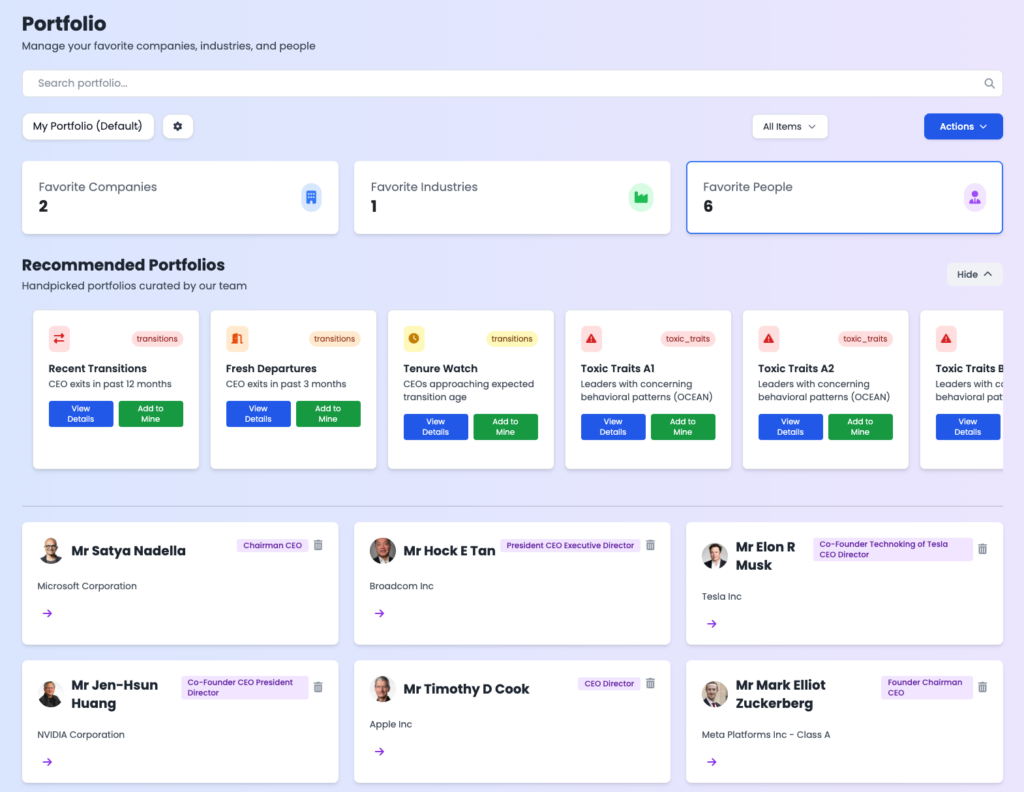
Behavioral Portfolios group stocks by executive traits—such as narcissistic leaders, power‑seeking extroverts, recent CEO transitions, or predicted near‑term departures—and then back‑test their performance against benchmarks using historic returns.
You can identify trait constellations that historically delivered positive abnormal returns over different regimes.
Additionally, you can construct sleeves in your portfolio—“controlled narcissism in high‑uncertainty markets,” “fresh but experienced CEOs,” or “attentional uniqueness in growth sectors”—where the behavior‑performance link is strongest.
The result is differentiated, research‑backed factor exposures that sit on top of your standard style and sector tilts.
Event‑driven alpha often hinges on who makes the decision, not just on what the event is.
Leadermind provides targeted tools for special situations:
M&A module: Flags acquiring CEOs with traits historically linked to overpaying or empire‑building, and targets led by leaders whose profiles support smoother integration and value creation.
Insider transactions: Distinguishes when insider buying by a given behavioral type has historically signaled genuine conviction versus publicity or miscalibrated optimism.
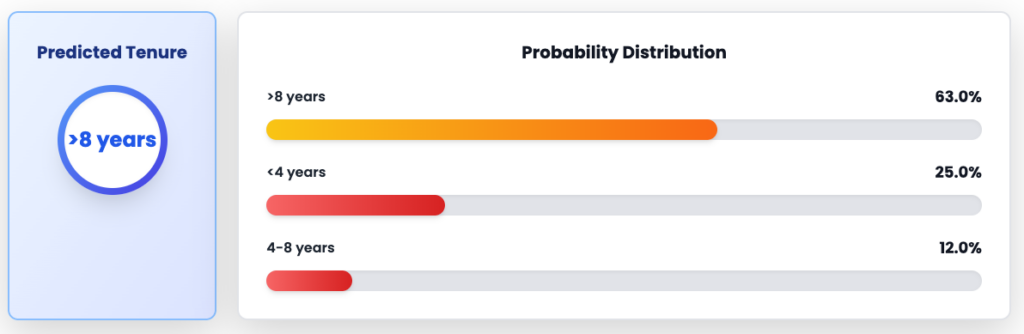
Tenure prediction: Anticipates CEO transitions that can catalyze multiple re‑ratings, letting you position ahead of the “new strategy” trade.
These insights allow you to size positions and express views around catalysts with better calibrated probabilities, turning noisy events into structured alpha opportunities.
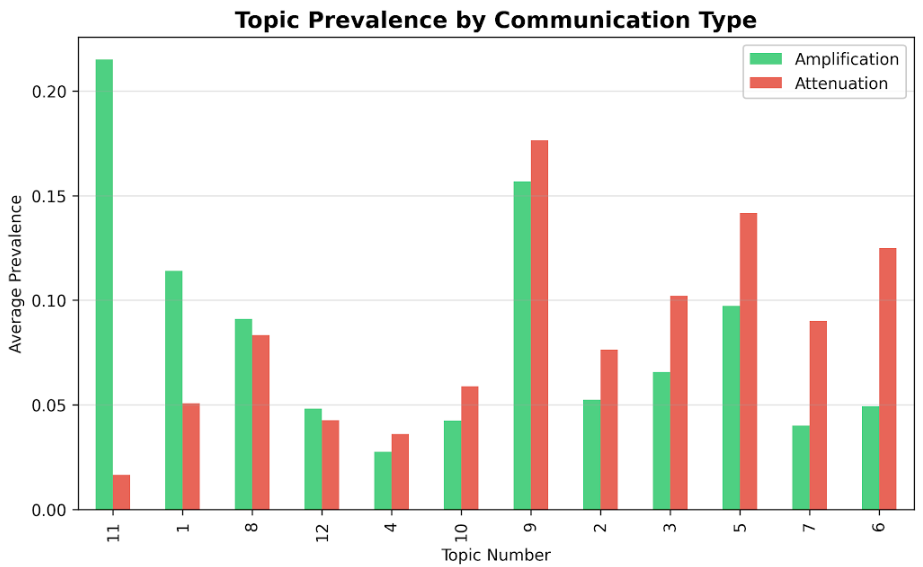
Our theme and topic analysis extracts granular signals from what executives actually say, how they say it, and what they mean by it:
Attentional uniqueness: Identifies firms whose leadership focuses on distinct, high‑conviction themes relative to peers—often where genuine innovation and future excess returns emerge.
Attentional breadth: Indicates the strategic focus compared to operational activities and competitor efforts.
Attentional consistency: Tracks commitment to efforts and investments, indicating distraction or abandonment.
Authenticity: How much of what they say do they believe versus posturing or attempting to influence perception.
This helps you separate true strategic differentiation from copy‑pasted buzzwords, sharpening your perception of variants in crowded trades like AI, the energy transition, or reshoring.
For professional investors, alpha is rarely about finding one magic signal—it is about combining independent edges into a coherent process.
Leadermind fits directly into that workflow:
Add behavioral scores as columns in your screening tools and factor libraries.
Incorporate leadership and attention metrics into your stock‑specific models as explicit drivers of position size, expected alpha, and holding horizon.
Use behavioral portfolios and back‑tests to design sleeves that complement your existing style exposures, increasing the proportion of returns driven by true stock‑specific insight.
Because scores and signals are exportable, they can be integrated into your current risk, optimization, and performance attribution systems.
The industry has already squeezed most of the juice from traditional factors and widely available data. The next durable source of idiosyncratic alpha lies in understanding how executives actually think, decide, and behave—and in making that behavioral insight systematic, testable, and investable.
We give you that edge.
To see how leadership behavior would have changed your portfolio’s alpha, explore Leadermind and run your own behavioral backtests today.
Event‑driven and swing traders live on catalysts—earnings calls, insider trades, M&A rumors, leadership changes, and regulatory shocks. But the same headline can play out very differently depending on who is in the CEO seat, how they handle uncertainty, and whether their past behavior aligns with the market’s expectations.
Leadermind is built to answer a simple question: given this event, and this leadership team, how is this likely to trade over the next few days, weeks, or months?
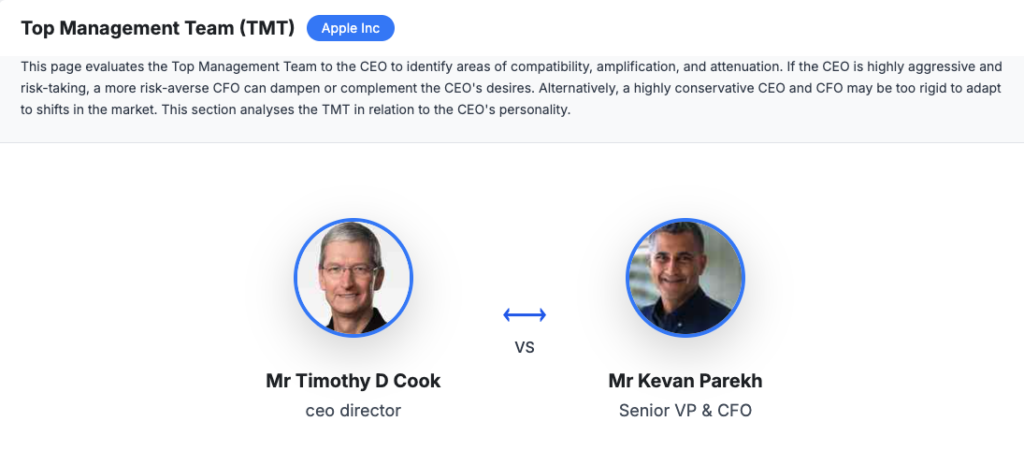
Behavioral finance shows that both investor psychology and executive psychology shape short‑term price moves, abnormal announcement returns, and post‑event drift. We focus on the executive side—profiling CEOs and top teams to estimate traits like overconfidence, narcissism, risk appetite, and attention focus, then linking them to event outcomes such as M&A success, insider trade informativeness, and crisis responses.
For situational investors and swing traders, this means every catalyst can be conditioned on “who is making the decision,” not just what the headline says.
Leadermind ingests transcripts, interviews, and other primary‑source language, then applies psychometric and machine‑learning models to estimate executive traits across multiple well-validated psychometric, behavioral, and value-oriented frameworks.
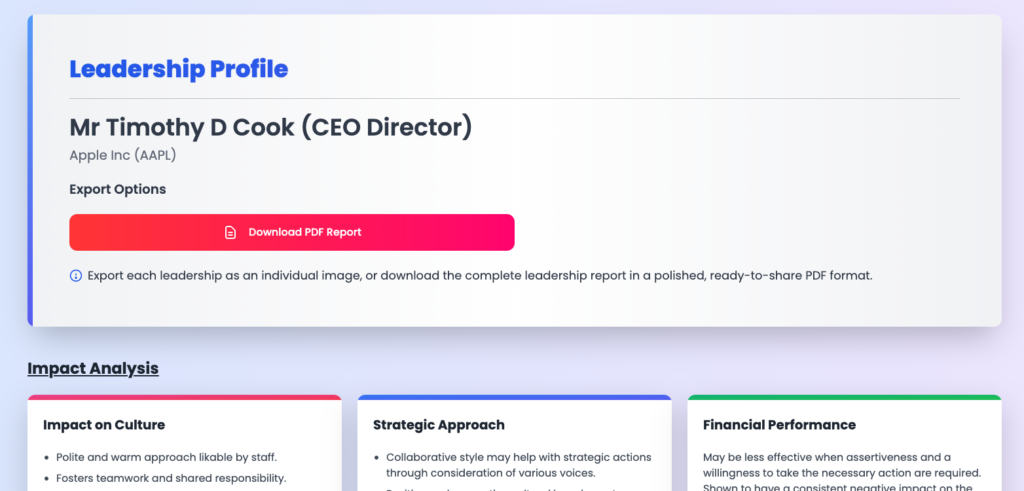
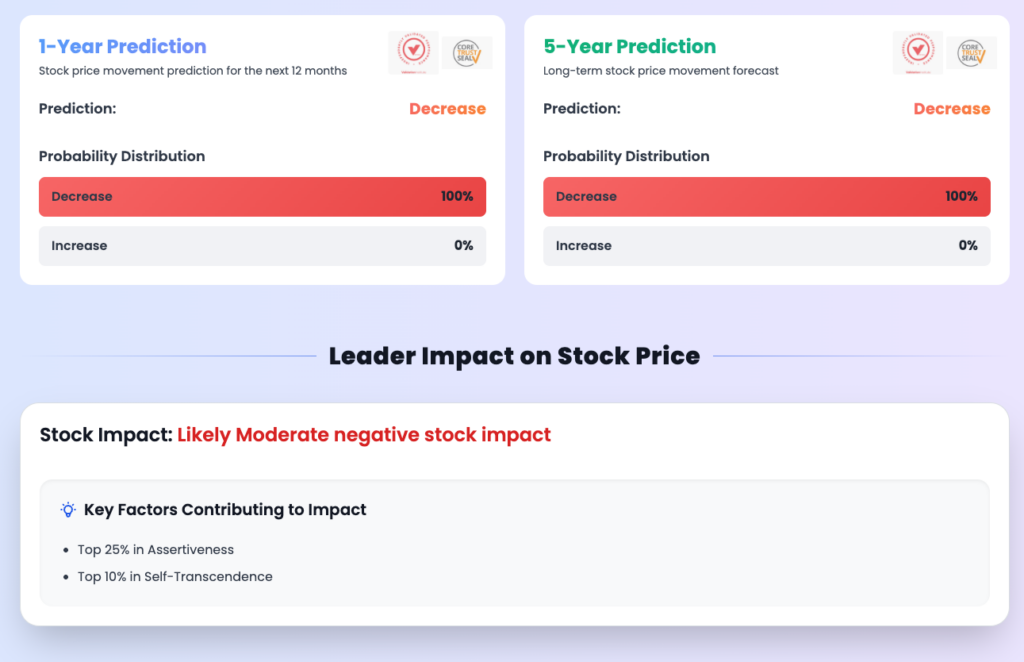
For each name, traders see a Stock Impact summary that links the most material traits to concrete behaviors: likelihood of aggressive M&A, leverage tolerance, tendency to overpromise, or preference for incrementalism.
In a swing‑trading context, this lets you:
Decide whether to fade or follow bullish guidance based on the CEO’s historical overconfidence profile.
Size trades differently when dealing with leaders prone to sharp, surprise‑driven actions versus slow, consensus‑driven operators.
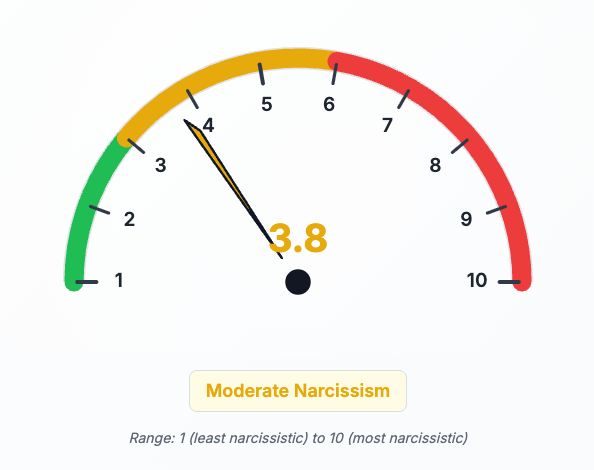
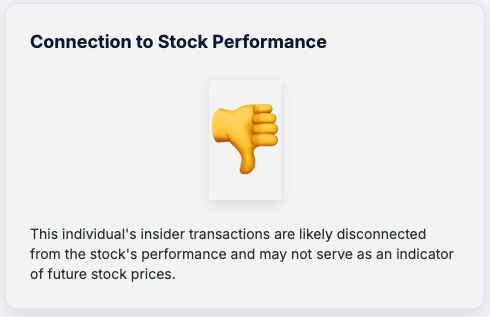
Insider trades are classic situational signals, but their profitability varies widely by who is trading and why. Research shows that personal attributes—including narcissism and overconfidence—explain a large share of the variability in insider trading performance, and that narcissistic CEOs’ trades tend to be less informative and less profitable than those of non‑narcissistic peers.
Leadermind’s Insider Transactions module overlays each trade with:
The executive’s behavioral profile and narcissism score.
Historical data on how similar executives’ trades have predicted future returns.
Swing traders can then prioritize following insiders whose profiles and histories indicate genuinely informed, high‑conviction trades and de‑emphasize noisy signals from self‑promoting or exploitative leaders.
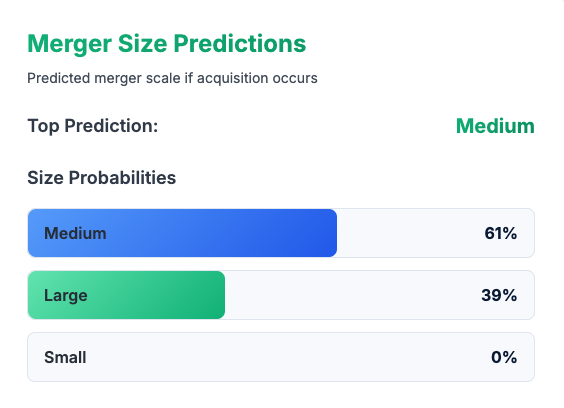
Announcement‑window returns and post‑deal performance depend heavily on who is doing the deal.
Studies show that overconfident and highly network‑central CEOs are more likely to pursue value‑destroying mergers, whereas deals that match CEO “type” and experience can yield positive abnormal returns.
Our M&A and Tenure tools give situational investors:
An instant view of whether the acquirer’s CEO profile historically aligns with successful or value‑destroying deals.
Indicators of CEO–chair or CEO–CFO tenure and relationship quality, which research links to post‑deal outcomes and abnormal returns.
For swing trades, this becomes an actionable tilt: lean into deals where leadership–deal fit is strong, and fade or short where the behavioral evidence points to overreach, overpaying, or poor integration odds.
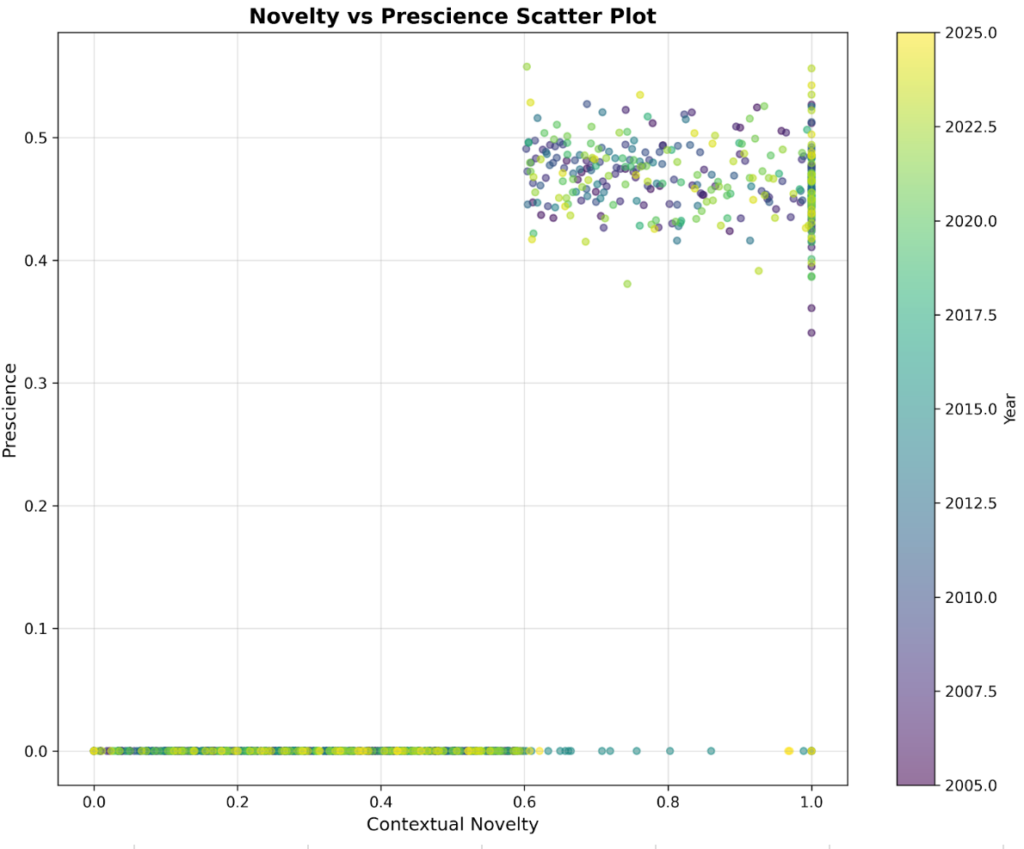
Earnings season and news bursts are prime ground for short‑term trades, but the signal is rarely just the numbers—it is how management frames surprises, risk, and strategy.
Leadermind’s theme analysis module uses advanced modeling to extract:
Attention and focus: Are they spending time on genuinely differentiated strategic themes, or chasing fashionable buzzwords?
Tone and intention: How does the CEO talk and react in negative situations, and how has that historically correlated with post‑earnings drift?
Relationship analysis: Indicators of stress or cohesion between CEO and CFO or CEO and analysts, which can foreshadow guidance credibility, future revisions, or leadership change.
For swing traders, this supports specific setups.
Fading euphoric language from historically overconfident or narcissistic CEOs when the fundamentals do not match the rhetoric.
Extending winners when disciplined leaders handle bad news with transparent, credible plans that markets reward over the following weeks.
We let professional investors codify repeatable situational patterns into trading playbooks. By combining behavioral portfolios, tenure predictions, insider‑signal quality, and transcript cues, you can define setups such as:
Hubris M&A short: Overconfident or narcissistic acquirer, large or unrelated deal, weak CEO–CFO relationship—historically associated with negative abnormal returns and post‑announcement underperformance.
Crisis‑ready operator long: High‑conscientious, low‑narcissism CEO facing a sector drawdown, with past evidence of measured crisis management and successful strategic pivots.
Insider‑led swing: Clustered insider buying by conservative executives whose past trades have shown strong predictive power, timed around catalysts like product launches or regulatory milestones.
These playbooks can be integrated into screeners and alerts so that when a qualifying event hits the tape, the trader already has a predefined behavioral edge and risk framework.
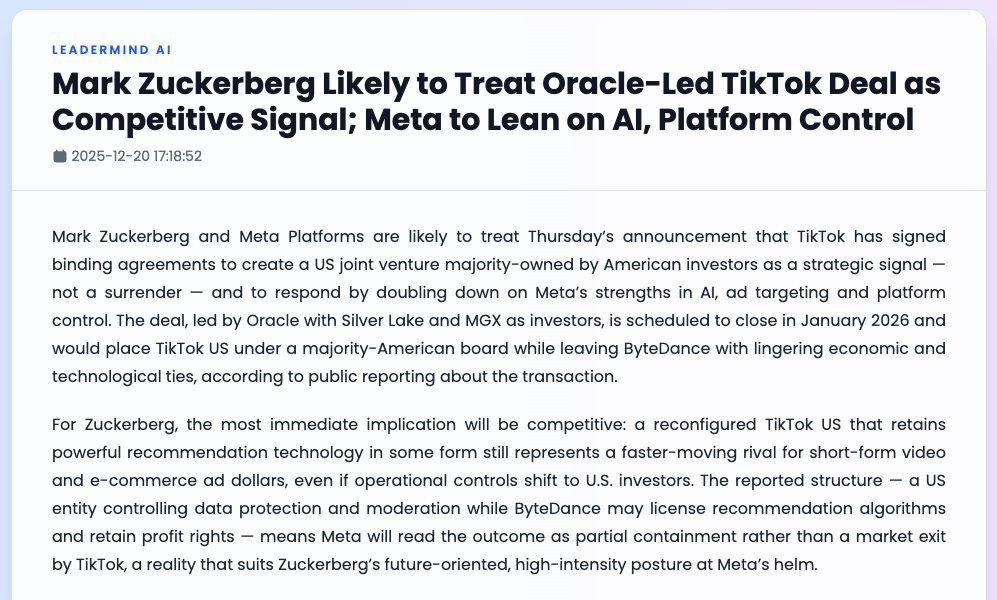
Situational investing and swing trading are about reacting faster and more accurately to events—but speed without context is just noise.
We add a critical layer of behavioral context, helping professional investors distinguish events that merely move the tape from those in which executive psychology creates a genuine edge in the direction, magnitude, and duration of the move.
By integrating behavioral intelligence into your event workflow, every insider trade, M&A headline, earnings call, or leadership change becomes a more informed, higher‑conviction trade idea.

A lot of investors lost money in Boeing because they did not know how Dave Calhoun would lead the company. Boeing is a blue-chip company known globally for aerospace innovation and design, and it is the maker of 42% of commercial airliners and 90% of cargo planes. After multiple crashes of the 737MAX, Boeing replaced their CEO in 2020 with Dave Calhoun. Calhoun, a Jack Welsh protégé from GE, brought instant credibility and assured shareholders that Boeing’s problems would be behind them.

Calhoun did increase Boeing’s stock price for a bit, but Calhoun’s personality and leadership style became too much, and Boeing suffered. His tenure is marked with deception and quality issues after a door blew out during a flight. Yet, Calhoun managed to triple his salary to $61M while the employees received about 3% in wage increases.
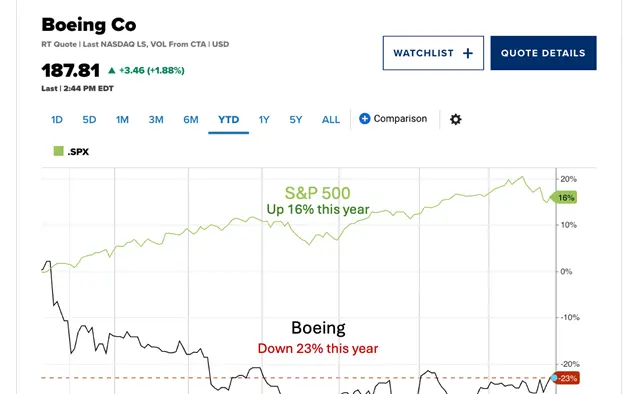
Could these problems be predicted? YES! Calhoun may have had a brilliant career, but he is the wrong fit for Boeing. Selfish and arrogant, he prioritized growth and personal gain over quality. He viewed employees as tools and objects to obtain his goals. He was a poor choice for Boeing, and now Boeing is paying for the decision.
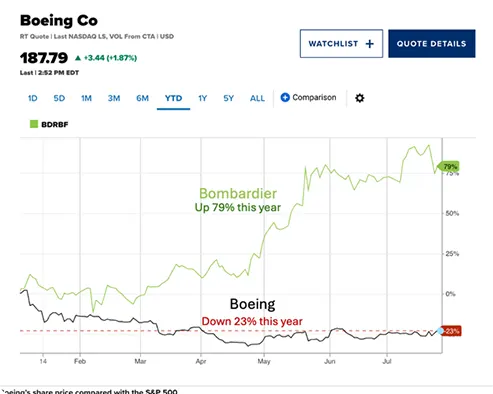
An investment of $1000 in Boeing on January 1, 2024, would be worth $770, while the same investment into Bombardier, a Boeing competitor, would be worth $1,790 – a $1020 difference. The economy and the airline industry were not factors in the performance. Instead, it was the difference in leadership. Thus, knowing the leaders is knowing the future of the company.