Investment decisions lack insight into the leader's impact on the organization. Despite substantial research demonstrating the connection between psychology and performance, no practical models exist. While great leaders can produce outsized gains, and poor leaders can wreak havoc, others can drown a company in mediocrity or stagnation. Some may argue that Intel and IBM fall into the latter category. The key is having models predict performance, reduce risk, and improve outcomes.
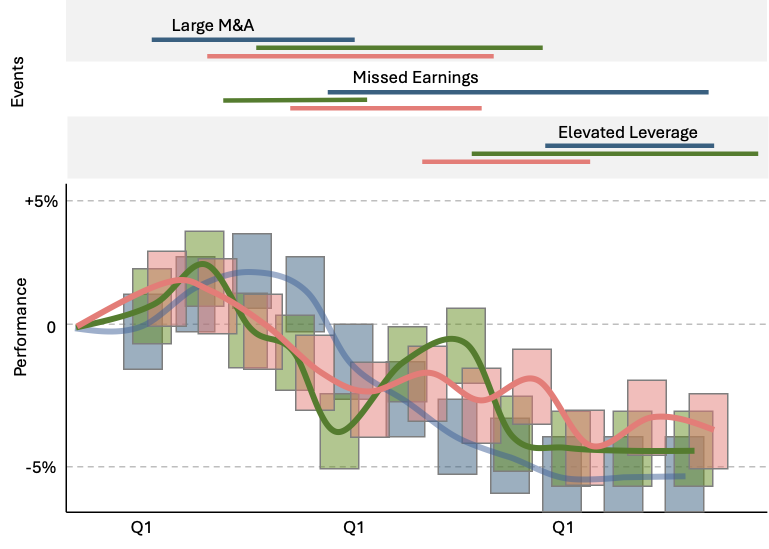
We apply quantitative analysis to understand the leaders, behaviors, beliefs, and attitudes of the organization that impact company performance. We wanted to develop insights using evidence-based research, proprietary models, and investment theories to predict company performance and likely outcomes. While each leader is different, each company is unique, and each situation is distinct, we have identified predictable behavioral patterns that lead to positive or negative consequences. Therefore, our models equip investors with insights that reduce risk and optimize returns.

Behavioral patterning requires a multifaceted consideration of an individual. While most research has evaluated personality and stock performance, other factors, such as traits, values, or cognitions, and other temporal, contextual, and environmental factors are consequential. Logicians, philosophers, and scientists have often described behaviors from this broader perspective; however, practical limitations have hindered progress.
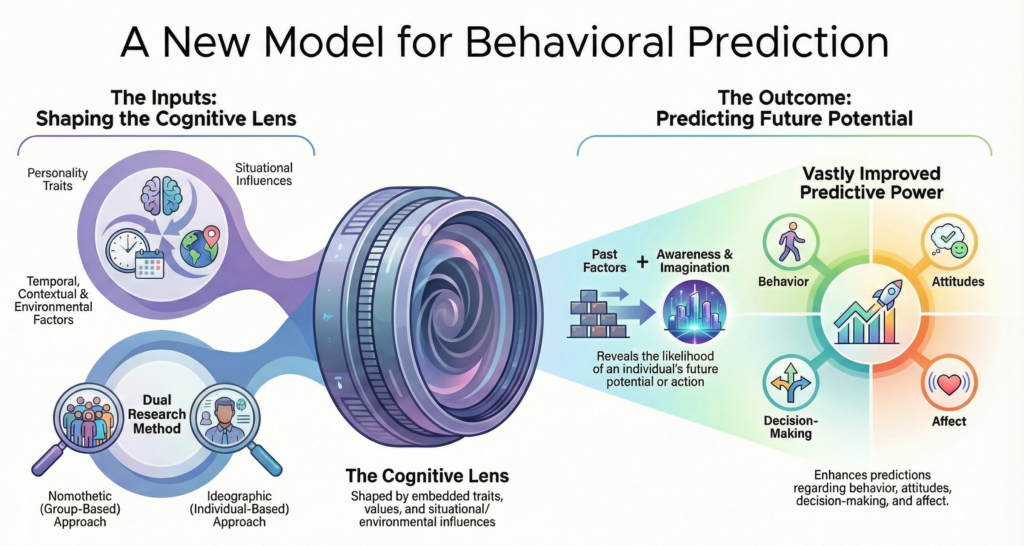
Using Upper Eschelons and the Behavioral Theory of Strategy, we have drawn on past research to develop models that vastly enhance the predictive capabilities of behavior, decision-making, and business practices. Our research suggests vastly improved predictive powers using both a nomothetic and an ideographic approach. We consider the factors that shape a person’s cognitive lens, including embedded traits and values, as well as situational and environmental influences. These past factors, combined with awareness and imagination, reveal the likelihood of future potential or action.
Charlie spoke and wrote about the psychological traps and tendencies that misguide leaders and hurt a company’s performance. Charlie’s advice pointed to an issue all investors know is lurking, but lacked a systematic way to evaluate it. Investors want to make money, invest in a winner, and beat the market. Unfortunately, there is little to no analysis of the leader. Slick-speaking CEOs with unlimited egos who underwhelm and underperform have burned many investors. LeaderMind undresses these leaders, develops behavioral profiles to predict performance, and provides a comprehensive analysis to assess potential.
Using artificial intelligence, psychometrics, economic theory, investment modeling, and behavioral patterning, Leadermind provides the insights you need to improve your success.